• Home
  • ABOUT
  • Publications
  • Contact

Landscape Archaeology

Landscapes encompass the natural environments of specific geographies and their geologic and ecological histories. Simultaneously, they are socially constituted and are not just passive backgrounds to historical events. People don't just ignore past traces of human activity on the landscape, such as archaeological ruins or desert trails, but reinterpret them through their contemporary present. Infrastructure: A key component of Empires in Motion is the study of travel infrastructure such as formal roads, byways, and caravan waystations. Such a focus necessitates a landscape-scale approach, where attention is given to the spaces between known settlements. As continuous features of the landscape, roads structure the flow and movement of communication, goods, and people, and often serve as the direct conduits of an empire's influence outside its heartland.
Video can’t be displayed

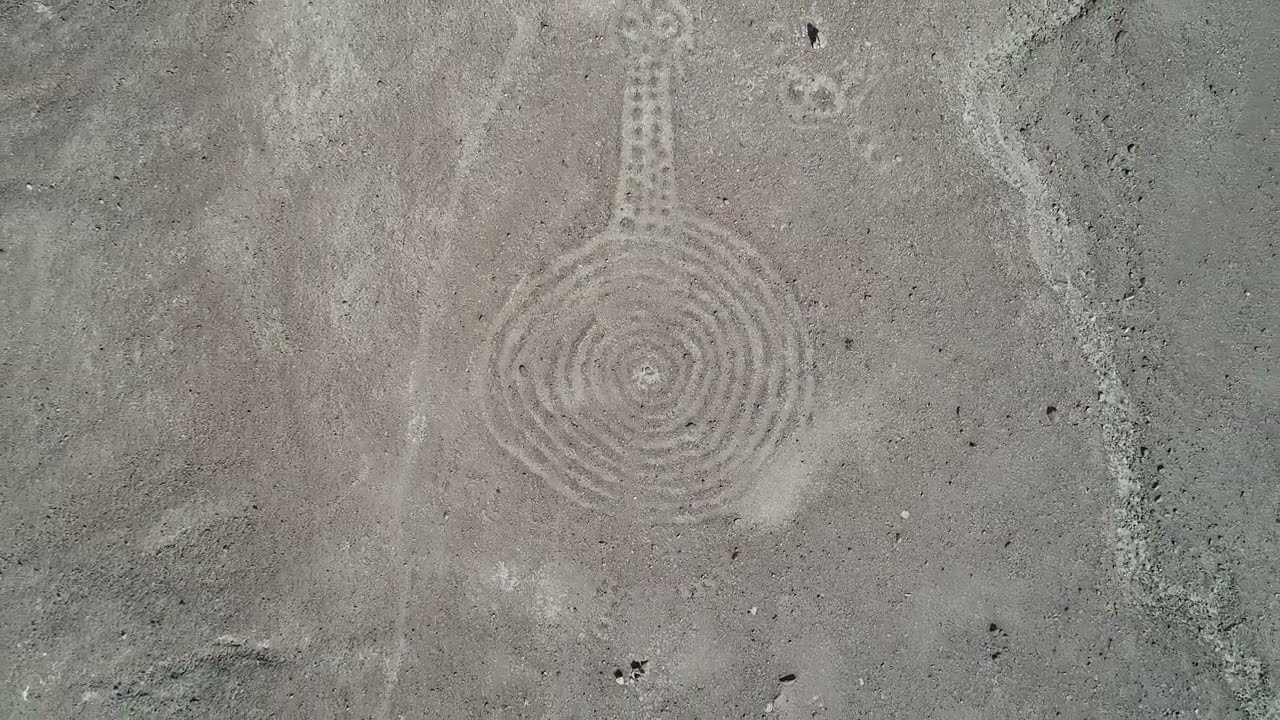
Geoglyphs & Rock Art: Geoglyphs are made by arranging stones and removing the natural desert pavement to reveal lighter-colored sediments underneath. Geoglyphs and rock art sites, such as this depiction of a snake located in the Majes Valley of Peru, mark desert roads along caravan routes and depict various zoomorphic and geometric figures.
Ritual: Powerful places, whether they be natural features such as mountain-top peaks or a roadway shrine, often required repeated ritual offerings. One such tradition from the study area is the offering of painted stone and ceramic tablets. This portable form of rock art used a variety of brightly colored pigments to depict human and zoomorphic figures among other designs (shown here with color enhancement). The painted tablets displayed here were deposited on the surface of long abandoned Wari and Inka centers, demonstrating how local peoples continued to incorporate ancient sites on the landscape within contemporary offering traditions. To read more...
Image manipulation software is used to inverse and define petroglyphs, engravings in stone, that are commonly found along inter-valley routes.
Other Topics
Andean empires
Landscape archaeology
geo- archaeology
gis & Remote Sensing
Collaboration

We use cookies to enable essential functionality on our website, and analyze website traffic. By clicking Accept you consent to our use of cookies. Read about how we use cookies.

Your Cookie Settings

We use cookies to enable essential functionality on our website, and analyze website traffic. Read about how we use cookies.

Cookie Categories
Essential

These cookies are strictly necessary to provide you with services available through our websites. You cannot refuse these cookies without impacting how our websites function. You can block or delete them by changing your browser settings, as described under the heading "Managing cookies" in the Privacy and Cookies Policy.

Analytics

These cookies collect information that is used in aggregate form to help us understand how our websites are being used or how effective our marketing campaigns are.